Condominium
in Perugia

Ventilated Facade
| Type | Residential building – condominium |
| Intervention | Renovation |
| Location | Perugia, Italy |
| Facade insulation | Isotec Parete Black by Brianza Plastica – 60 mm thick, 600 mm pitch |
| Insulated facade surface | 5.250 sqm |
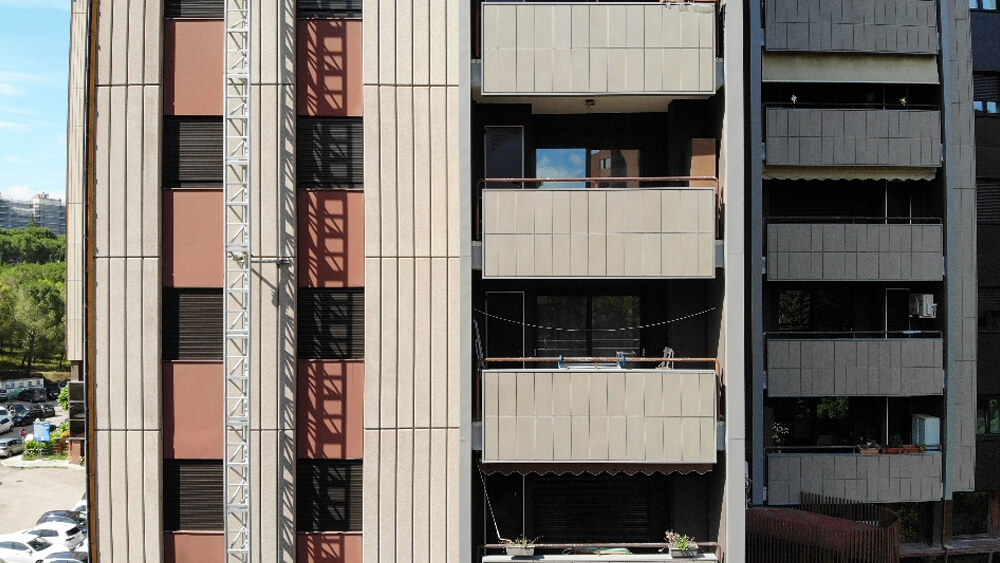
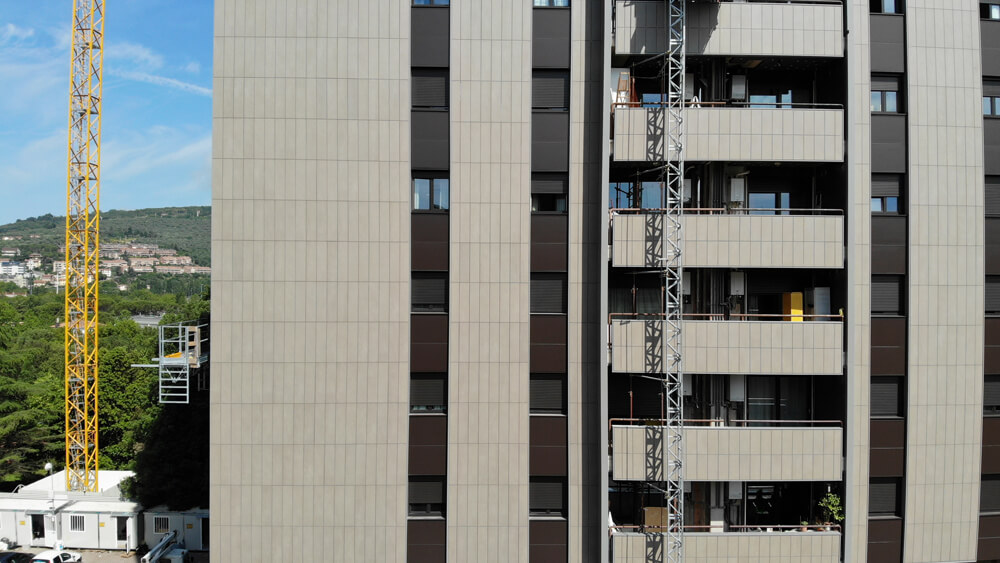
| Facade cladding | Stoneware slabs, 30×120 cm |
| Energy performance | From class E to class B |
The project
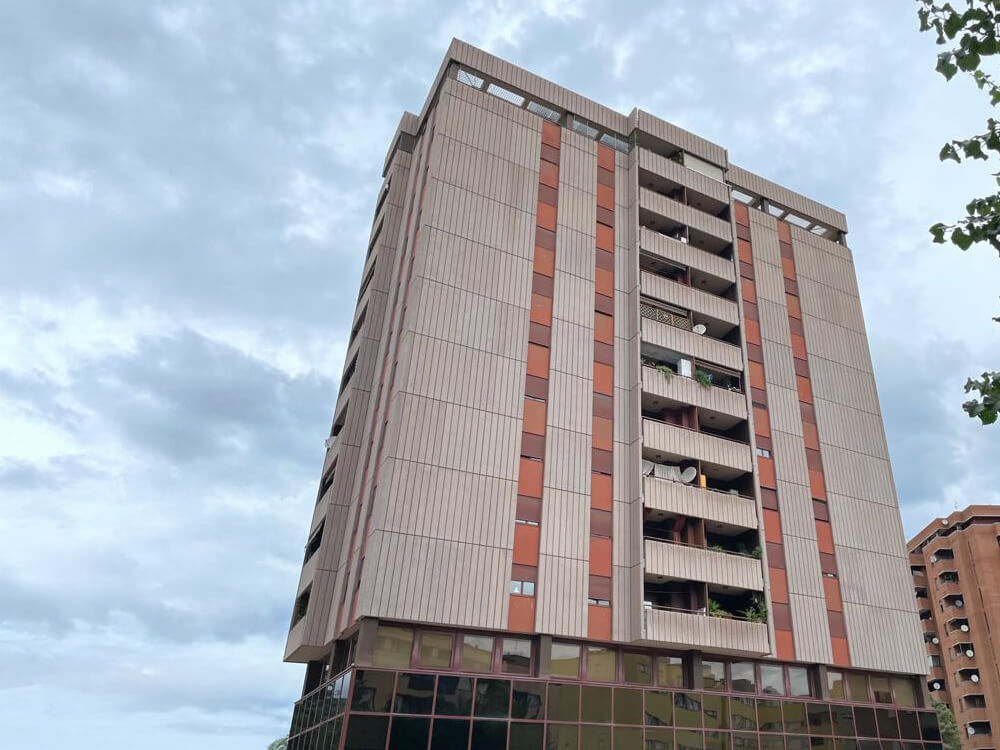
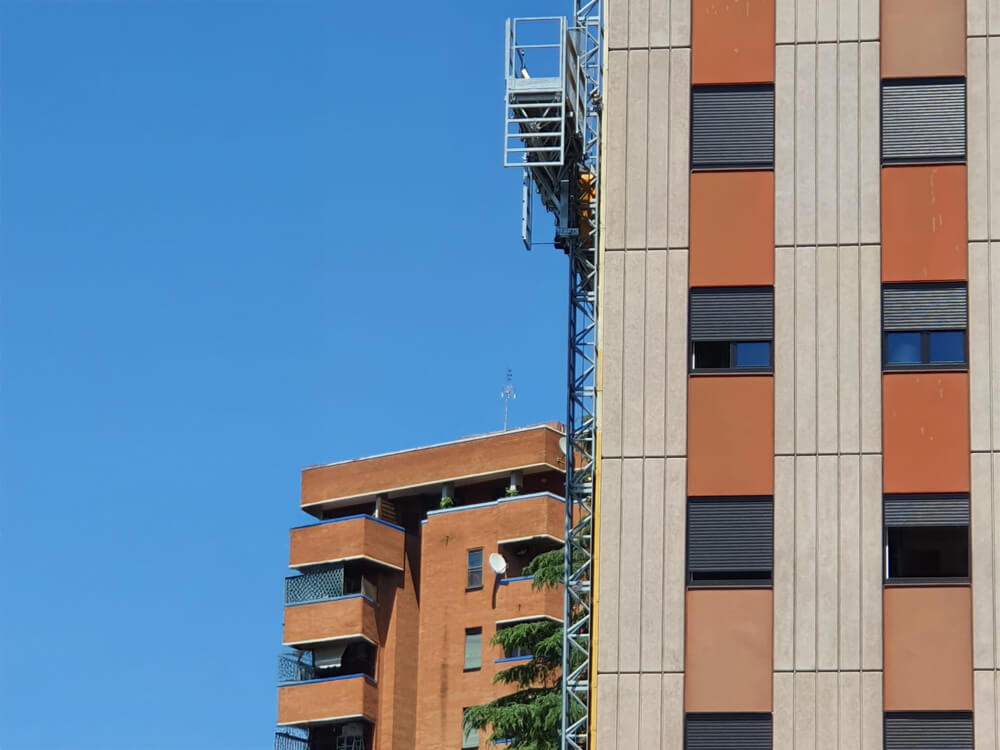
The complex in Via Guerra, Perugia, consists of two 12-storey buildings, each comprising 69 apartments, with commercial spaces occupying the first two floors. Both buildings feature a T-shaped layout and a structural system of beams and columns made of prefabricated elements consisting of concrete and steel profiles. The infill walls are made of reinforced concrete panels with a vertically ribbed external surface. To improve the overall energy performance of the complex, the design team opted for a ventilated facade solution.
The intervention
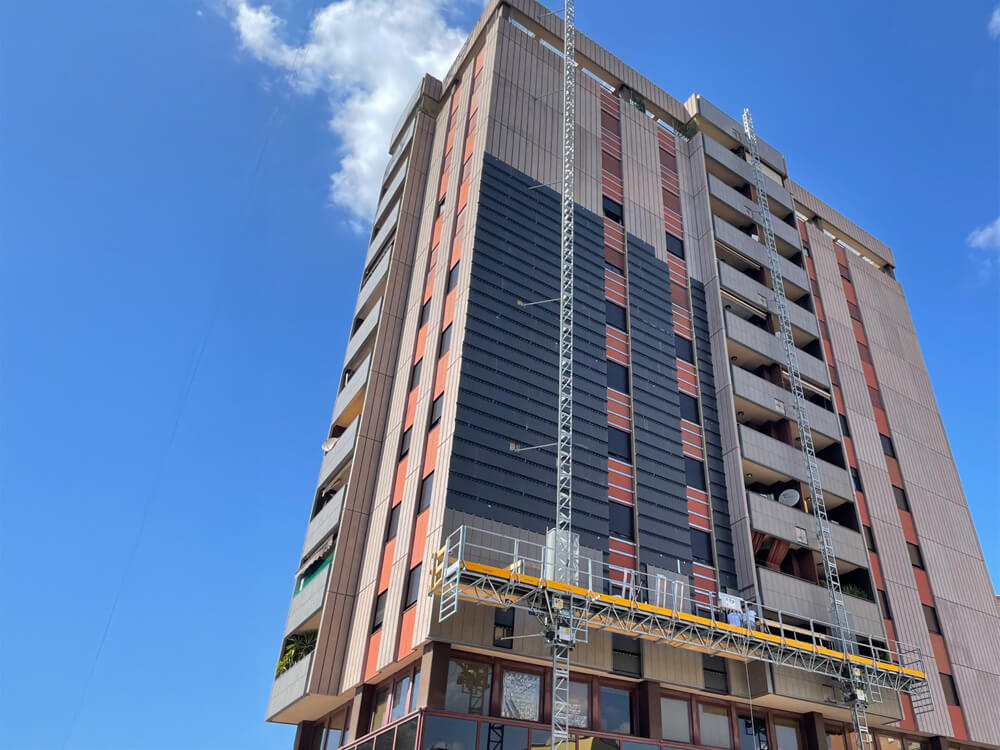
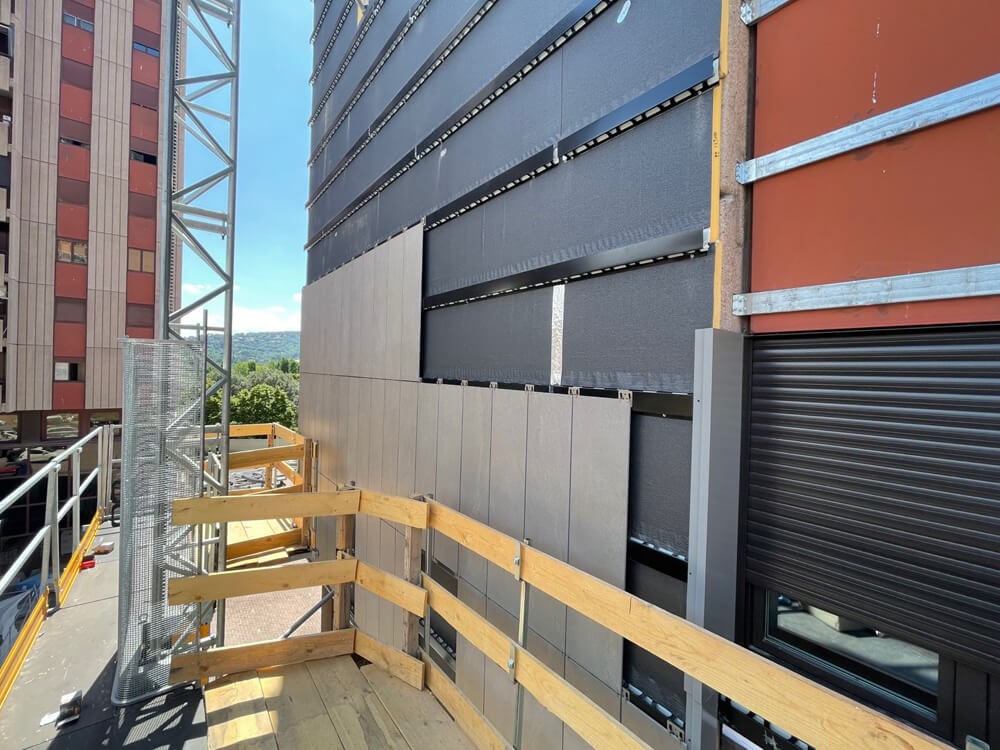
Given the considerable height of the 12-storey buildings, the design team selected the Isotec Parete Black System for its enhanced fire reaction performance (classified as B-s2, d0). The panels were dry-fixed to the existing plastered and clinker-clad substrate using galvanised steel anchors. Ceramic stoneware slats, selected in the 30×120 cm size and installed vertically, were then fixed to the Isotec Parete Black metal stiffeners using visible hooks, recreating the running bond pattern of the previous cladding. The regular geometry of the large, continuous surfaces, combined with the ease of installation of the Isotec Parete System, made it possible to reduce the time required to construct the ventilated facade and streamline on-site operations. A distinctive feature of the project was the absence of scaffolding. The facades were installed using mobile platforms, made possible by the light weight of the panels and their ease of handling at height.
The result
The energy efficiency upgrade of the building envelope, achieved through the use of a ventilated facade solution, allowed complete freedom in the choice of cladding finish while eliminating thermal bridges, resulting in an improvement of three energy classes. The transition from class E to class B has led to significant reductions in heating and cooling costs and a noticeable improvement in indoor comfort.