Teatro alla Scala

Historic building
| Type | Historic building |
| Intervention | Roof restoration |
| Location | Milan, Italy |
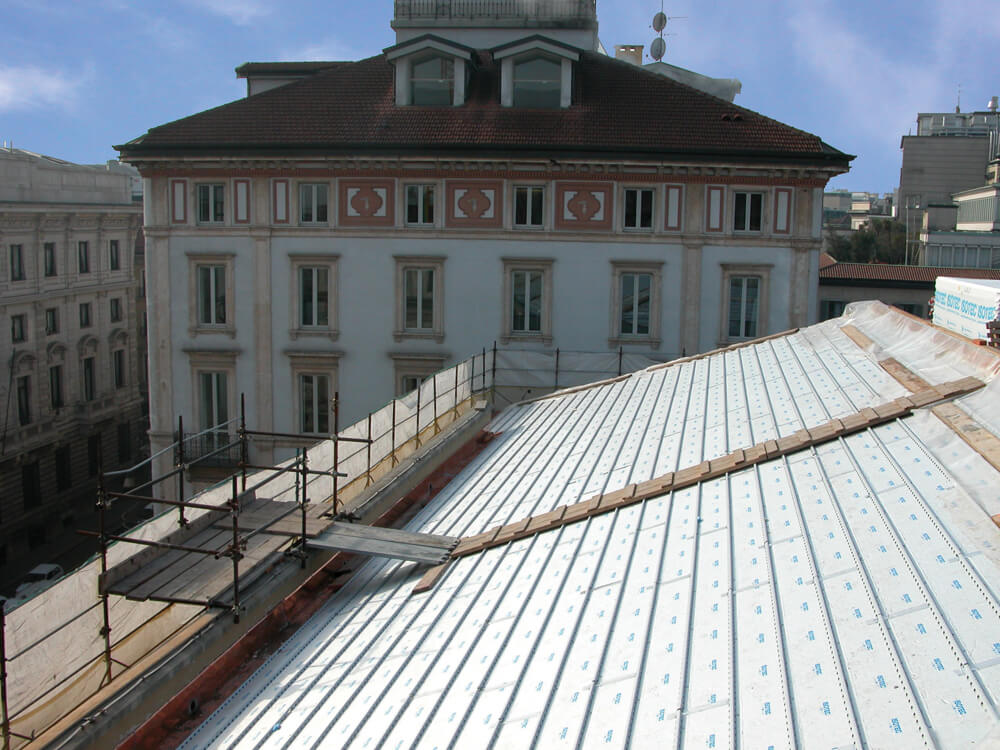
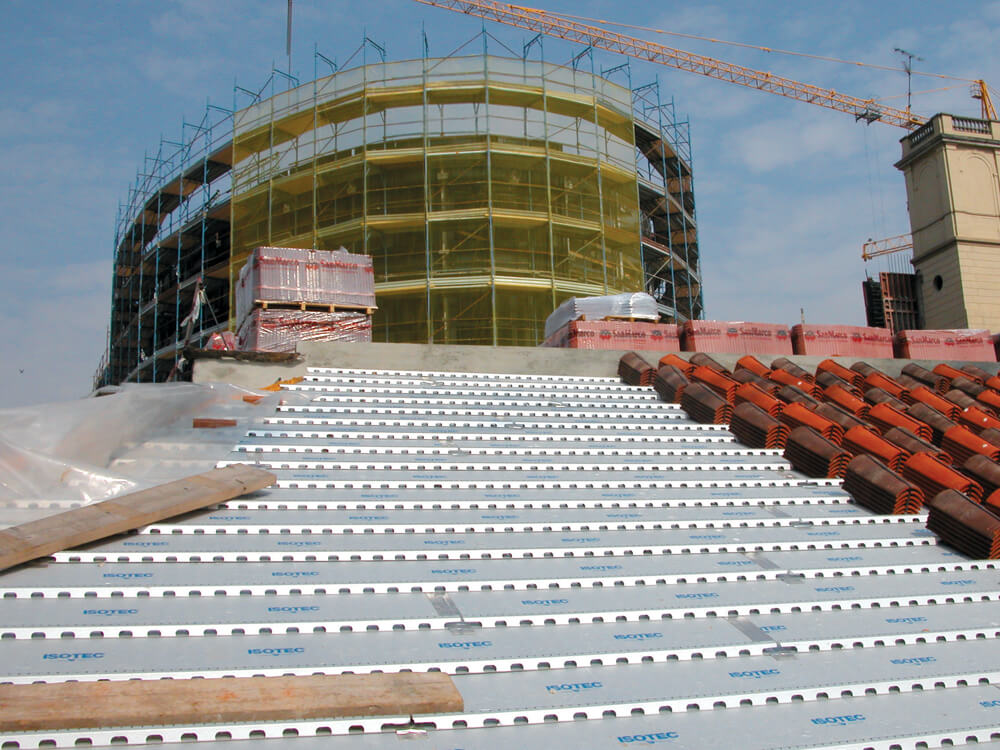
| Roof insulation | Isotec by Brianza Plastica – 60 mm thick, 342 mm pitch |
| Insulated roof surface | 2,300 sqm |
| Roof cladding | Pantiles |
| Year of intervention | 2002 – 2004 |
History
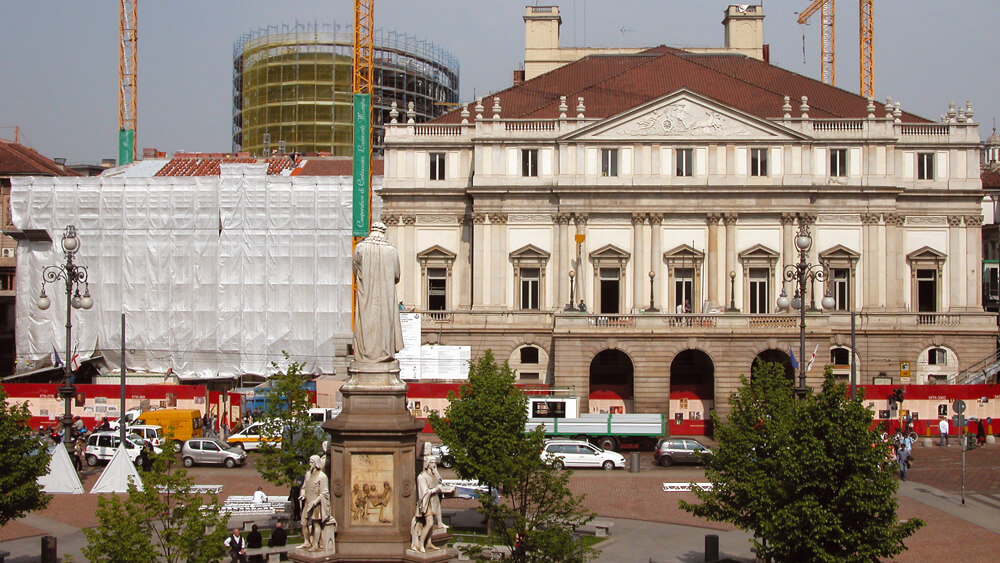
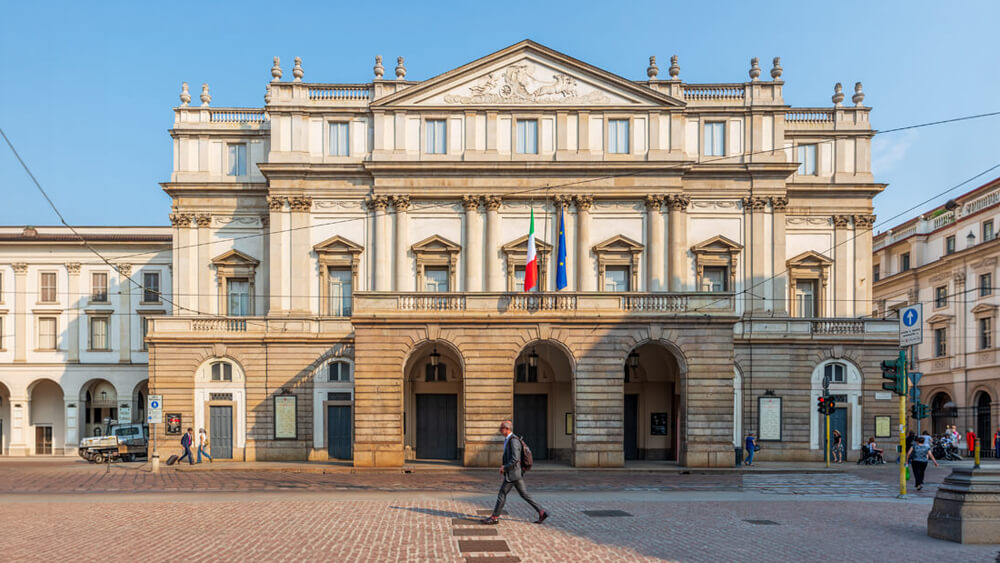
Teatro alla Scala in Milan is one of the most famous opera houses in Europe. It was founded at the behest of Empress Maria Theresa of Austria in 1776 to replace the Teatro Regio Ducale, which had been destroyed by fire. Designed by the renowned Neoclassical architect Giuseppe Piermarini, the theatre takes its name from the church of Santa Maria alla Scala, which once stood there. It was inaugurated on 3 August 1778 with an opera by Antonio Salieri. The building was subsequently expanded in 1814 to increase the depth of the stage, incorporating part of the site of a demolished convent in the San Giuseppe district.
The intervention
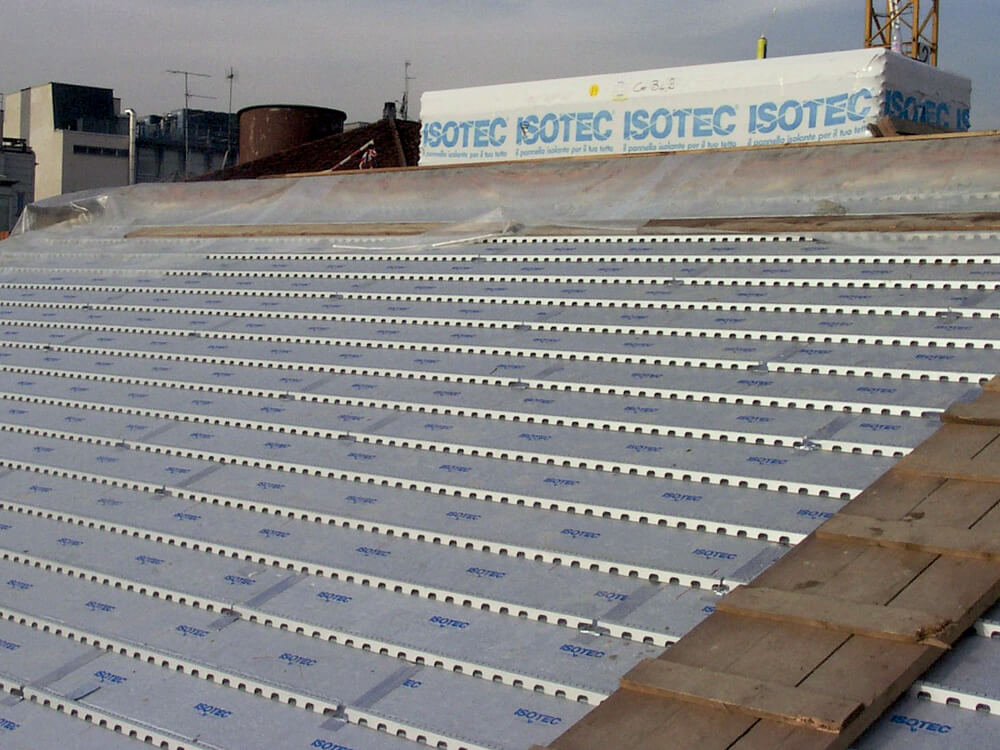
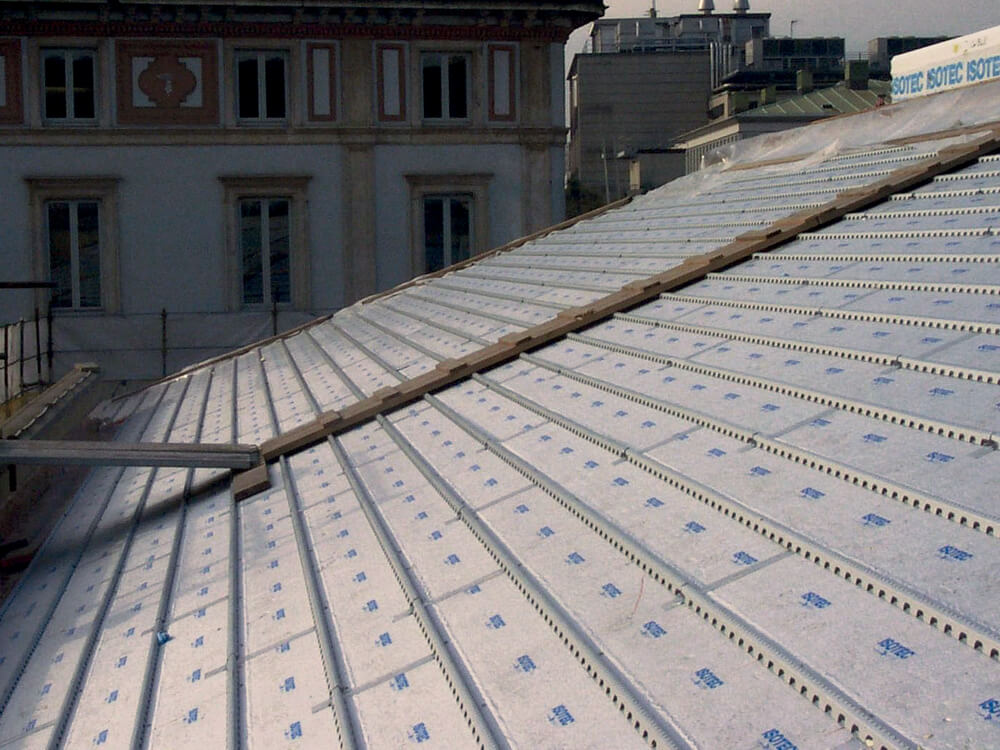
Between 2002 and 2004, Teatro alla Scala underwent an extensive programme of restoration and redevelopment works, aimed at both restoring parts of the historic building and expanding its facilities. Designed by Mario Botta Architetti, the restoration included two new structural volumes rising above the eaves of the existing Neoclassical building: a tall, rectangular structure expanding the fly tower along the main axis of the Piermarini auditorium, and an elliptical structure suspended above the nineteenth-century wing on Via dei Filodrammatici to house the theatre’s dressing rooms. The Isotec ventilated thermal insulation system was selected for the conservative restoration of this section of the building. Installed using an entirely dry construction method, the panels insulated the roof while providing effective ventilation. This helps dissipate excess heat during the warmer months and remove moisture during the winter months. The system’s ease and speed of installation also helped optimise construction times, providing the theatre with an efficient, high-performance roofing structure designed to ensure thermal comfort throughout the building.
The building today
Today, La Scala remains one of the world’s most renowned opera houses and a celebrated symbol of Milan and Italy. Following the refurbishment and modernisation of its stage machinery, the theatre continues to pursue a high-quality approach to opera and performance, capable of combining the traditional stagione (seasonal) and repertorio (repertoire) models. Its programme features around 284 performances each season, including a wide range of operas, ballets, concerts and special events held both at La Scala and at other venues. Since 1951, on the initiative of conductor Victor De Sabata, La Scala’s season has traditionally opened on 7 December, the feast day of Saint Ambrose, patron saint of Milan.